
The complete guide
Choosing a Boneless Chaise Lounge Chair, A Practical Buyer's Guide
The problem with ordinary seating
Most of us inherit our furniture layout from whoever drew the floor plan. There is a spot for a three-seater against the long wall, and everything else gets squeezed around it. Then real life happens. The spare room becomes a study. The living room has to host a gaming setup and a reading corner. Someone moves into a flat where the couch physically will not clear the stairwell.
A boneless chaise lounge chair solves a narrow but very common problem. It gives you real seating without a frame, without assembly, and without the bulk that stops a conventional sofa from working in a tight room. Because the structure is foam rather than timber, it can be compressed into a box, carried by one person, and squeezed around corners that would defeat a rigid piece.
How a boneless design actually works
Traditional sofas get their shape from a hardwood or metal frame, with webbing or springs underneath and foam on top. Take the frame away and you normally get a beanbag, which is comfortable in a slouchy way but gives you no support and is a nuisance to get out of.
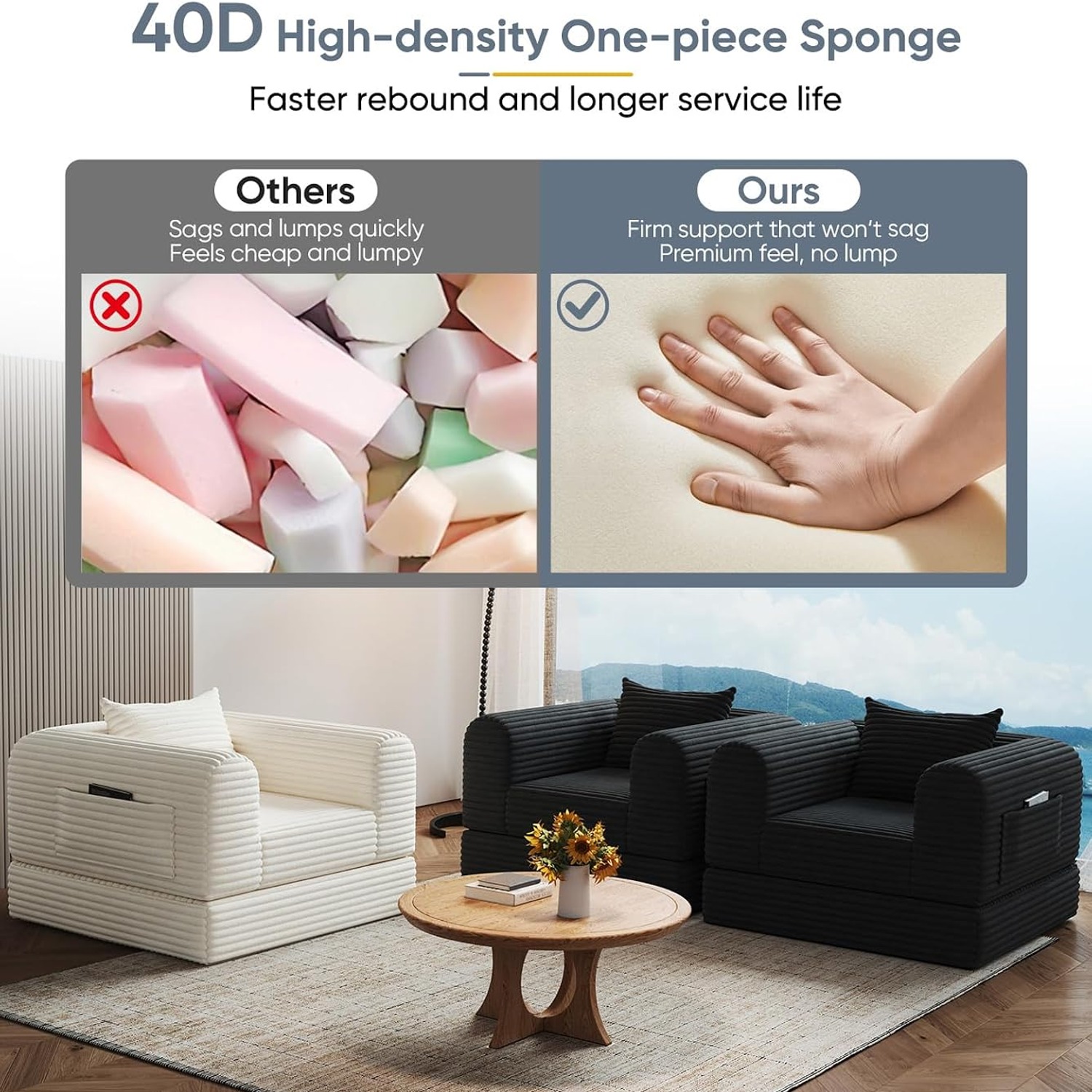
The middle path is high-density foam. This piece uses a 40D memory foam fill, which is dense enough to hold a defined seat shape on its own. The listing describes the feel as firm, with firm back support. In practice that means you sit on the surface rather than disappearing into it, and standing up does not involve a wrestling match.
Density is the spec worth paying attention to when you compare options. Cheap floor seating often uses shredded offcuts or very low-density foam. It feels generous for the first few weeks, then develops a permanent dip under the spot where everyone sits. A denser fill costs more up front and holds its shape much longer, which is the whole point of buying one of these rather than a bag of foam chips.
The two-in-one part
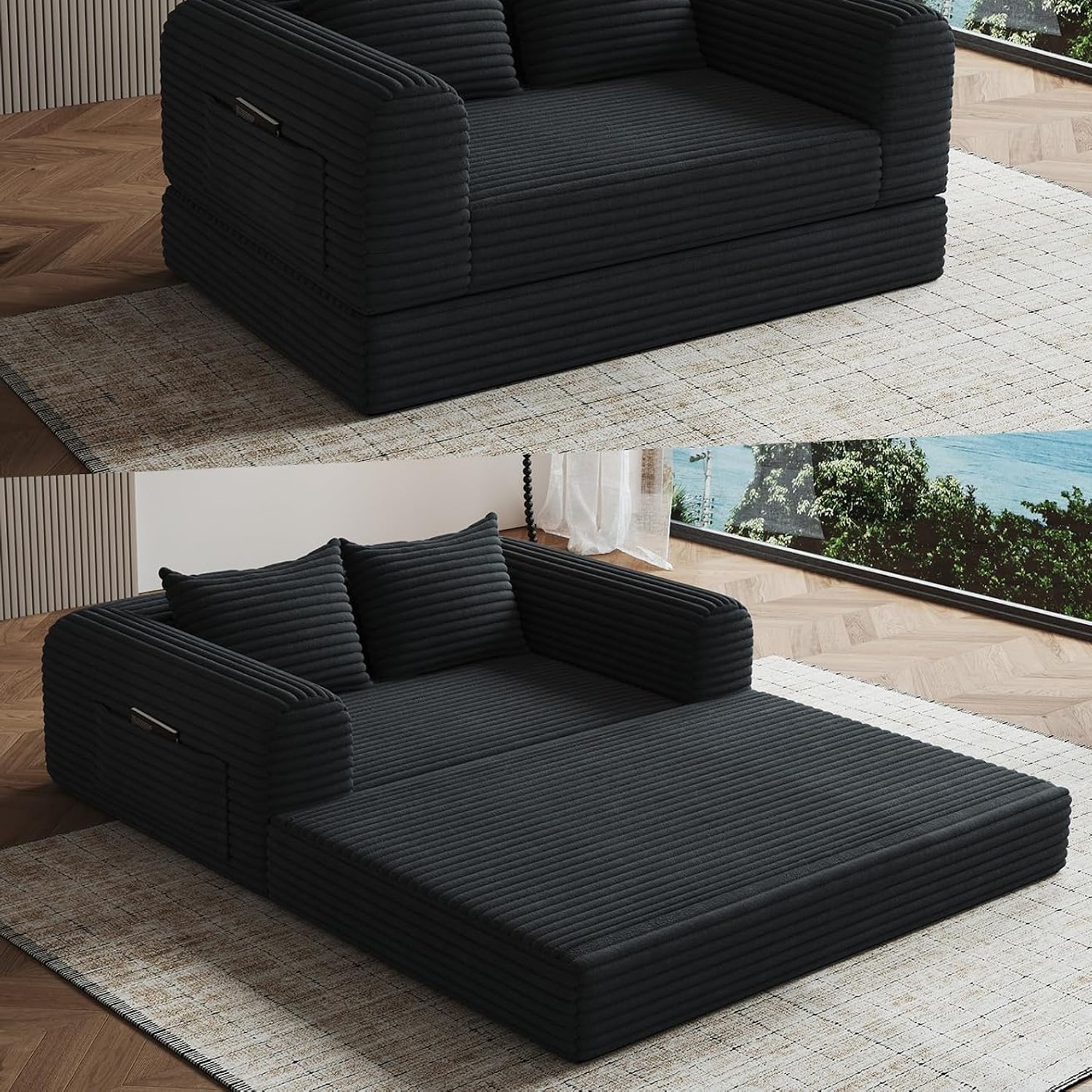
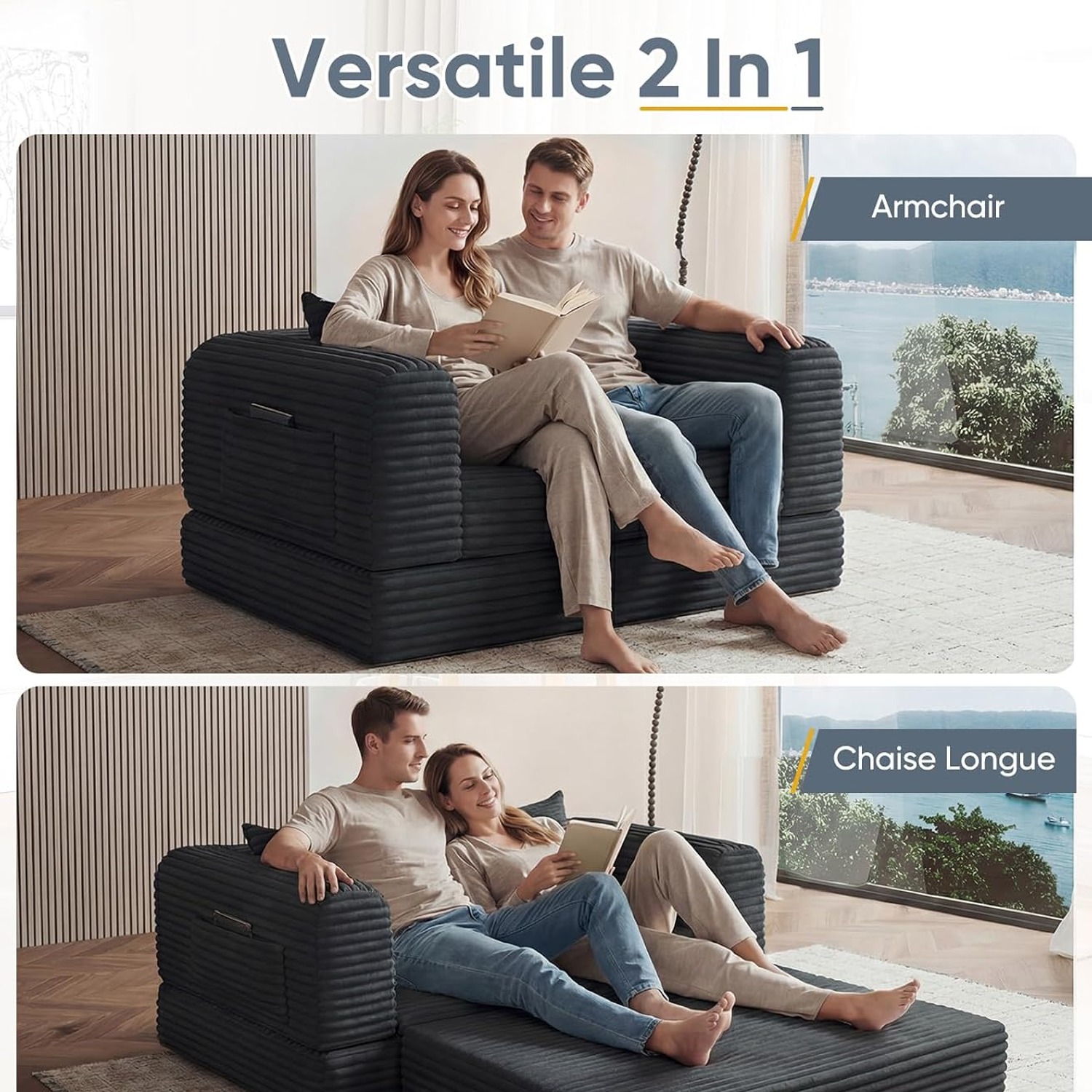
The convertible layout is the reason most people choose this shape over a plain floor cushion. In one position it reads as a square, modern loveseat with a seating capacity of two. Rearrange the sections and it becomes an extended lounger you can put your legs up on.
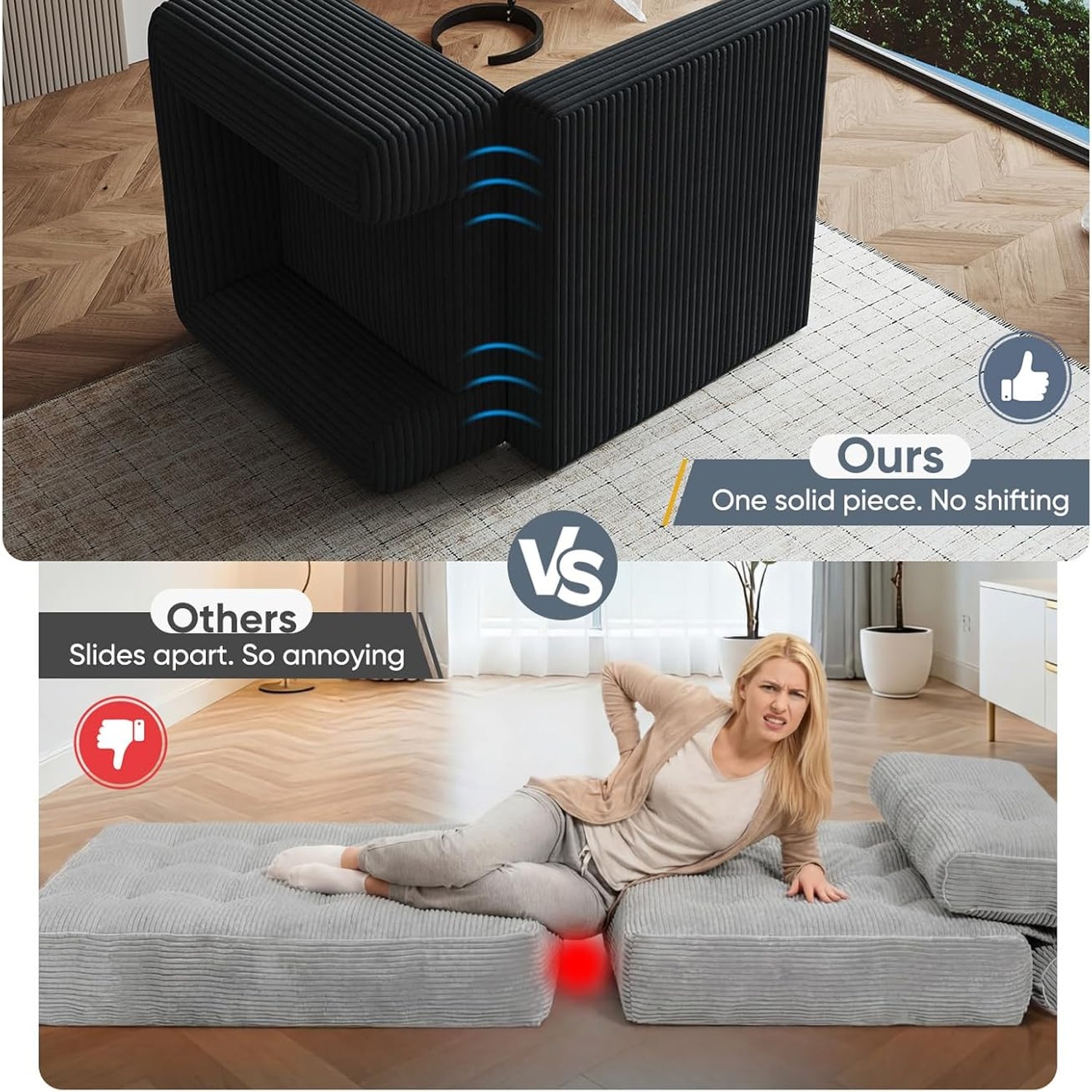
The design is described as a patented integrated one, which matters more than it sounds. The common complaint with modular floor seating is drift. You sit down, shift your weight, and over an evening the sections slowly slide apart until you are straddling a gap. An integrated design is built so the sections stay in their intended relationship to each other.
Worth noting what it does not do. It is not modular, not extendable, and not customisable. You cannot buy a matching corner piece next year. What you get is one well-sorted piece with two useful configurations, which is the right trade for most rooms.
Who it suits
It suits people who are short on floor space and long on ideas about how a room should be used. Studio apartments, student housing, home offices that double as guest rooms, and media rooms all fit the brief.
It suits households where the furniture gets a workout. There is no exposed timber leg to get kicked, no sharp corner at toddler head height, and nothing to tighten with an Allen key in six months. The 800 lb stated weight limit gives plenty of margin.
It suits people who hate flat-pack. Genuinely no assembly, no tools, no hardware.
It is less suited to anyone who wants a formal lounge suite look, anyone who needs to seat four or more, or anyone hoping to put it on a balcony. The listing is clear that this is an indoor product, and foam plus flannel plus weather is a bad combination.
Getting the size right
Measure before you buy. That advice is boring and it is also the single biggest cause of furniture regret.
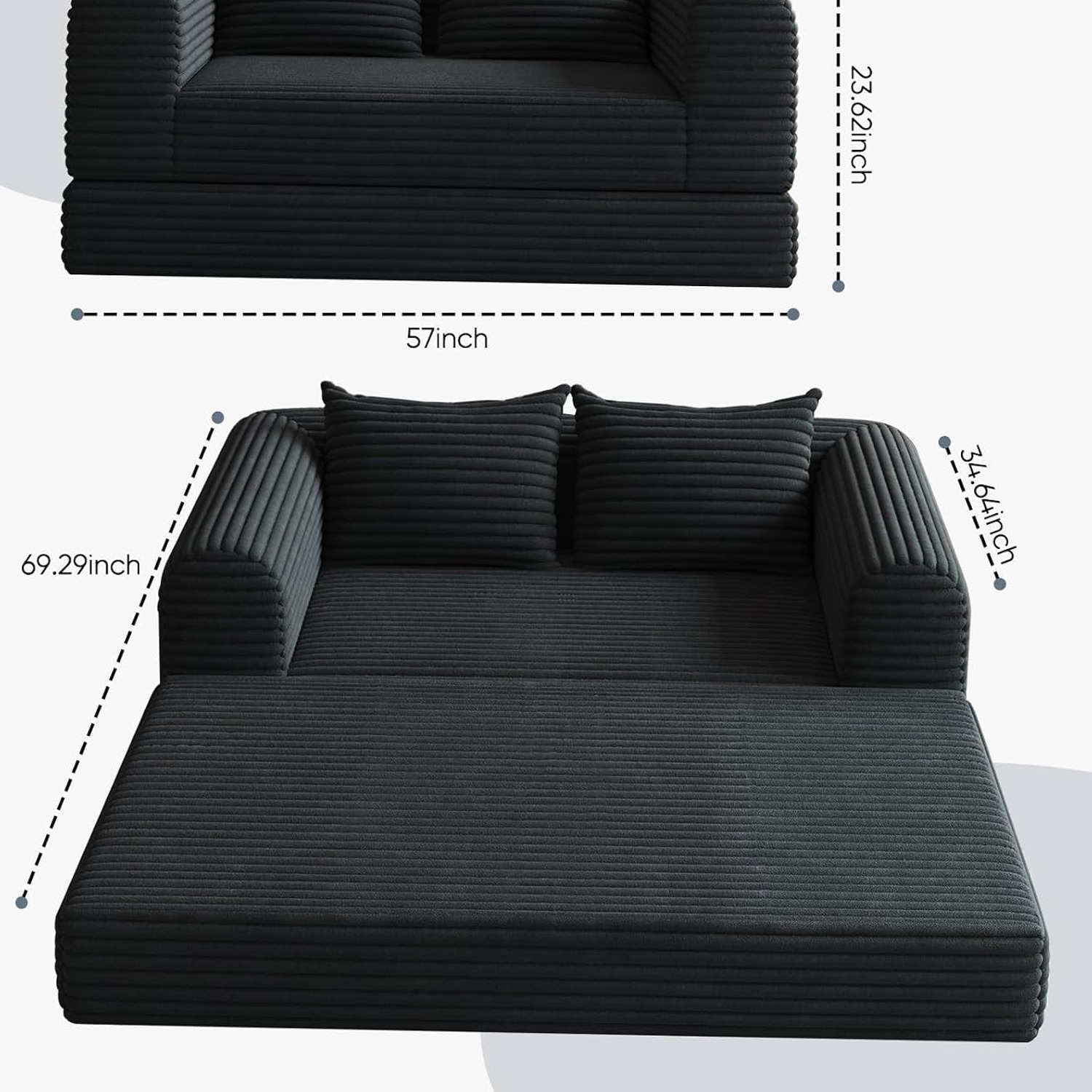
The footprint is 88.9cm deep by 101.6cm wide by 61cm high. Seat depth is listed at 100cm and seat height at 15 inches. The extended item dimension is given as 100 x 200 x 38 cm, so allow for roughly two metres of length when you plan the lounger position.
Mark it out on the floor with masking tape before the box arrives. Walk around the tape. Open the doors that need to open. If you are putting it in a bedroom, check that the extended position does not block the wardrobe. Also check the orientation, since the piece is listed as left hand facing, and decide which wall it will live against.
The 61cm height is low by sofa standards. That is an advantage in a small room because it keeps sightlines open and makes the space feel larger, but it does mean sitting lower than you might be used to. If you have knee or hip issues that make low seating awkward, that is worth thinking about honestly.
Unboxing and the 72-hour wait
Compressed shipping is why a 16 kg piece of seating arrives in a manageable box. It is also why there is a waiting period.
Get the box into the room where the piece will live before you open it. Cut the outer packaging carefully, keeping the blade shallow so you do not score the fabric. Unroll it on a clean floor with space around it, then walk away.
The foam will spring up quickly and look nearly finished within an hour or two. It keeps recovering for about three days. Allow the full 72 hours before you judge the firmness or the exact dimensions. Room-temperature air helps; a cold garage slows the process down. Resist the urge to sit on it the first evening, because even recovery gives you a better seat long term.
Fabric and keeping it looking decent
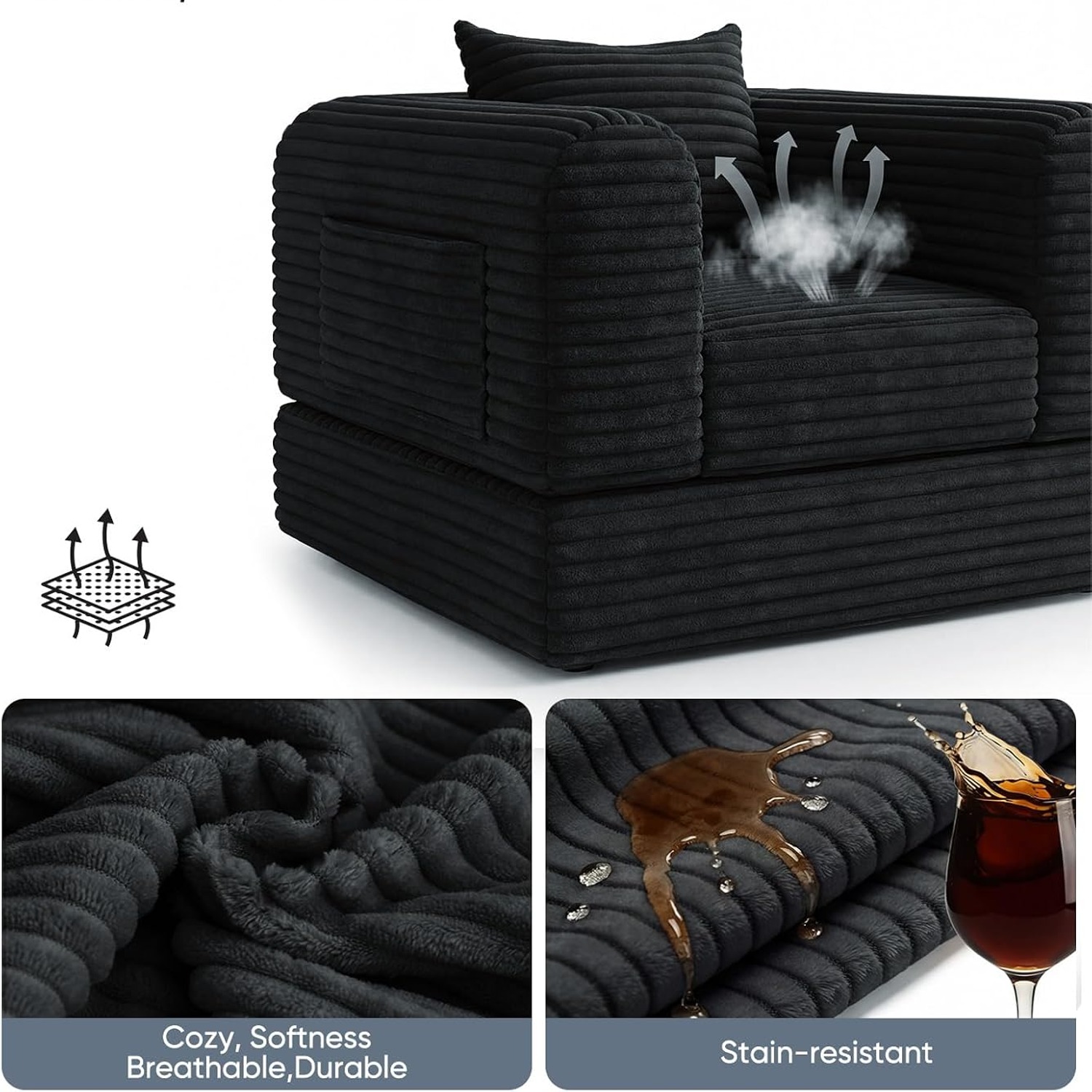
Flannel is a good match for a piece like this. It has a brushed surface that feels warm straight away, which matters on a low seat you will contact with bare arms and legs. The listing describes it as soft, durable and stain resistant.
The care instruction is simple. Wipe clean with a dry cloth. For spills, act fast and blot rather than rub, because rubbing pushes liquid deeper into the pile and the foam underneath. A barely damp cloth is fine for a sticky mark, but let the area dry fully before anyone sits down.
Three habits make the biggest difference over a few years. Vacuum the surface occasionally with a brush attachment so grit does not grind into the fibres. Rotate or flip the cushions every month or two so wear spreads out. Keep it out of long stretches of direct sunlight, which fades any dark fabric over time.
Black helps. It is the forgiving end of the colour range for a seat that will catch crumbs, pet hair and the occasional coffee near-miss.
Comparing it to the alternatives
Against a beanbag, you get far more support and a proper two-person seat, at the cost of some of that sink-in softness.
Against a conventional loveseat, you get easier delivery, no assembly, a lighter piece you can move alone, and a lower profile that suits small rooms. You give up a tall supportive back and a formal look.
Against a futon or sofa bed, you get much simpler operation with no mechanism to jam, and a far lighter piece. You give up a proper mattress width for two sleepers.
Against a pile of floor cushions, you get a shape that stays put and does not need rearranging every time someone stands up.
The short version
This is a 16 kg, black flannel, two-seat convertible lounger built on 40D memory foam, measuring 88.9 by 101.6 by 61cm with an 800 lb weight limit. It arrives compressed, needs no assembly, and takes 72 hours to reach full size. It is indoor only, firm rather than squashy, backless with an included pillow, and not modular.
If you want seating that fits a small room, arrives without a toolkit, and switches between sitting up and stretching out, it does that job well. If you need a formal suite or a four-seater, look elsewhere. Measure the floor, mark the tape, and give the foam its three days.