
The complete guide
How to Choose a Three Seater Fabric Lounge That Actually Fits Your Room
The problem with buying a lounge online
Most lounge regret comes down to two things. Either the sofa is the wrong size for the room, or it feels wrong to sit on after the first week. Both are avoidable, but only if you slow down for ten minutes before you order and look at the actual numbers instead of the photo.
Photos lie about scale all the time. A lounge styled in a huge studio with a tiny side table looks compact. The same lounge in a 3.5 metre wide living room swallows a whole wall. The fix is boring and it works, which is to write down the width, depth and height, then mark them on your floor with masking tape.
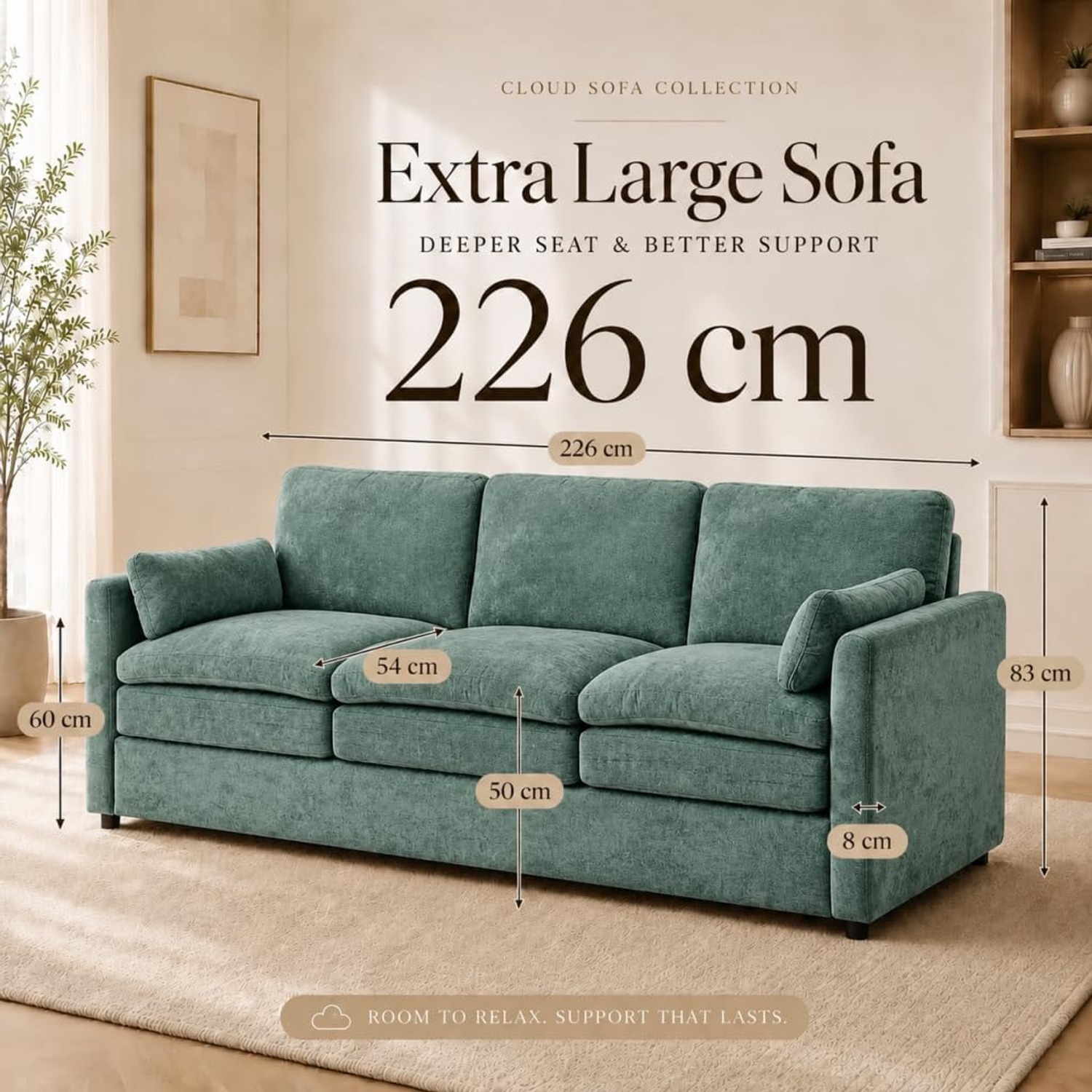
For this lounge the numbers are 183cm wide, 73cm deep and 92cm high. Seat depth is 51cm and seat height is 48cm. Those five figures tell you nearly everything you need to know about whether it will suit you.
What the measurements actually mean day to day
Width is the easy one. At 183cm, this sits in the middle of the three seater range. It is not a sprawling corner unit, and it is not a squeezed two-and-a-half seater pretending to be bigger. Three people fit. Two people with room for a dog or a cushion pile fit very comfortably.
Depth is where comfort lives. The overall depth is 73cm and the seat depth is 51cm. That seat depth is the sweet spot for most adults of average height. You can push your back right against the cushion and still rest your feet on the floor. Go much deeper and shorter people end up perching on the front edge or needing a pillow behind them permanently. Go much shallower and tall people feel like they are sitting on a bench.
Seat height of 48cm matters more than people expect, especially in households with older family members. That is roughly dining chair height. Standing up from it does not require momentum. Low lounges look great in magazines and get annoying fast if your knees complain.
The seat back interior height is 40cm, with a total height of 92cm. That gives you proper back contact without a towering backrest that blocks sightlines in an open plan room.
How the cushioning is built
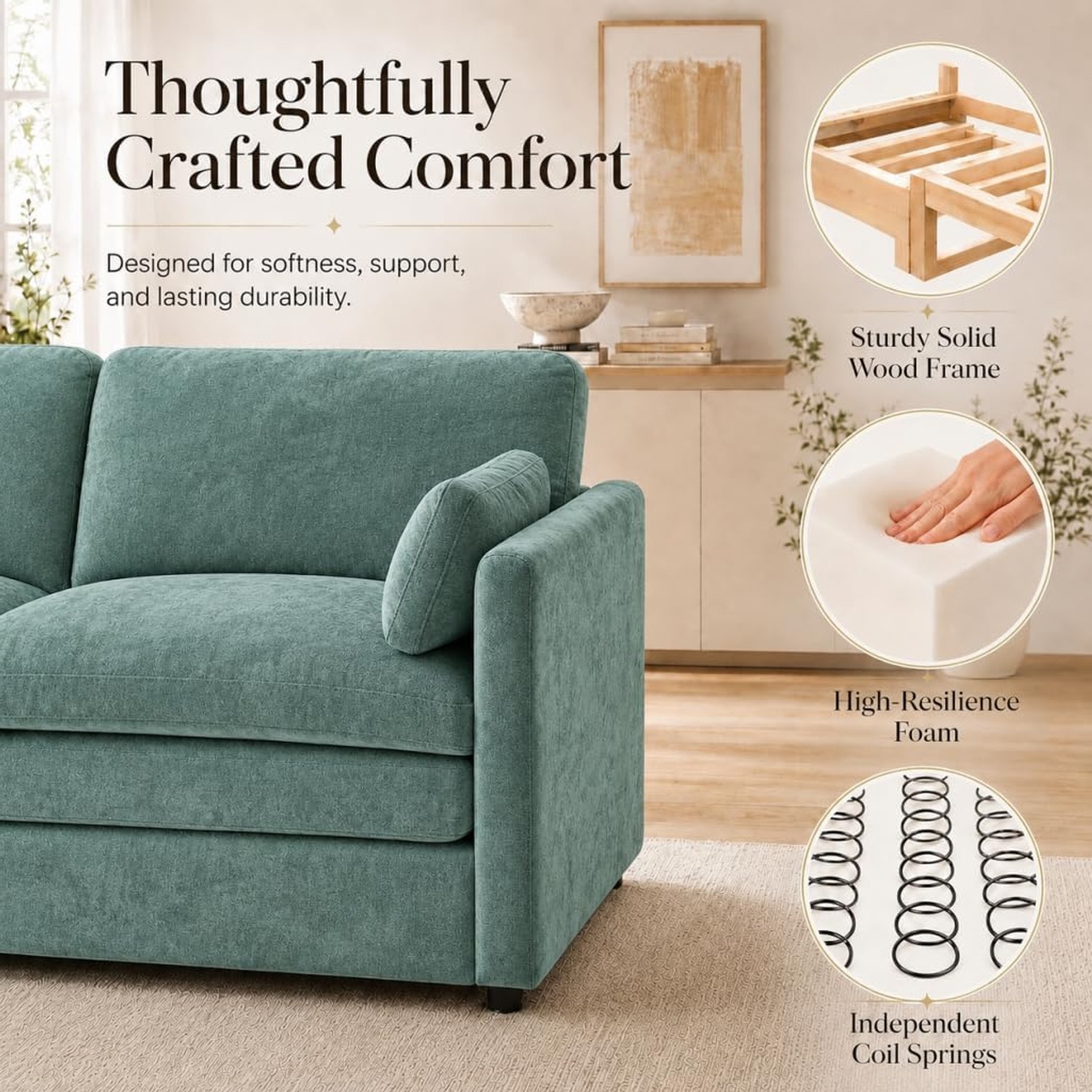
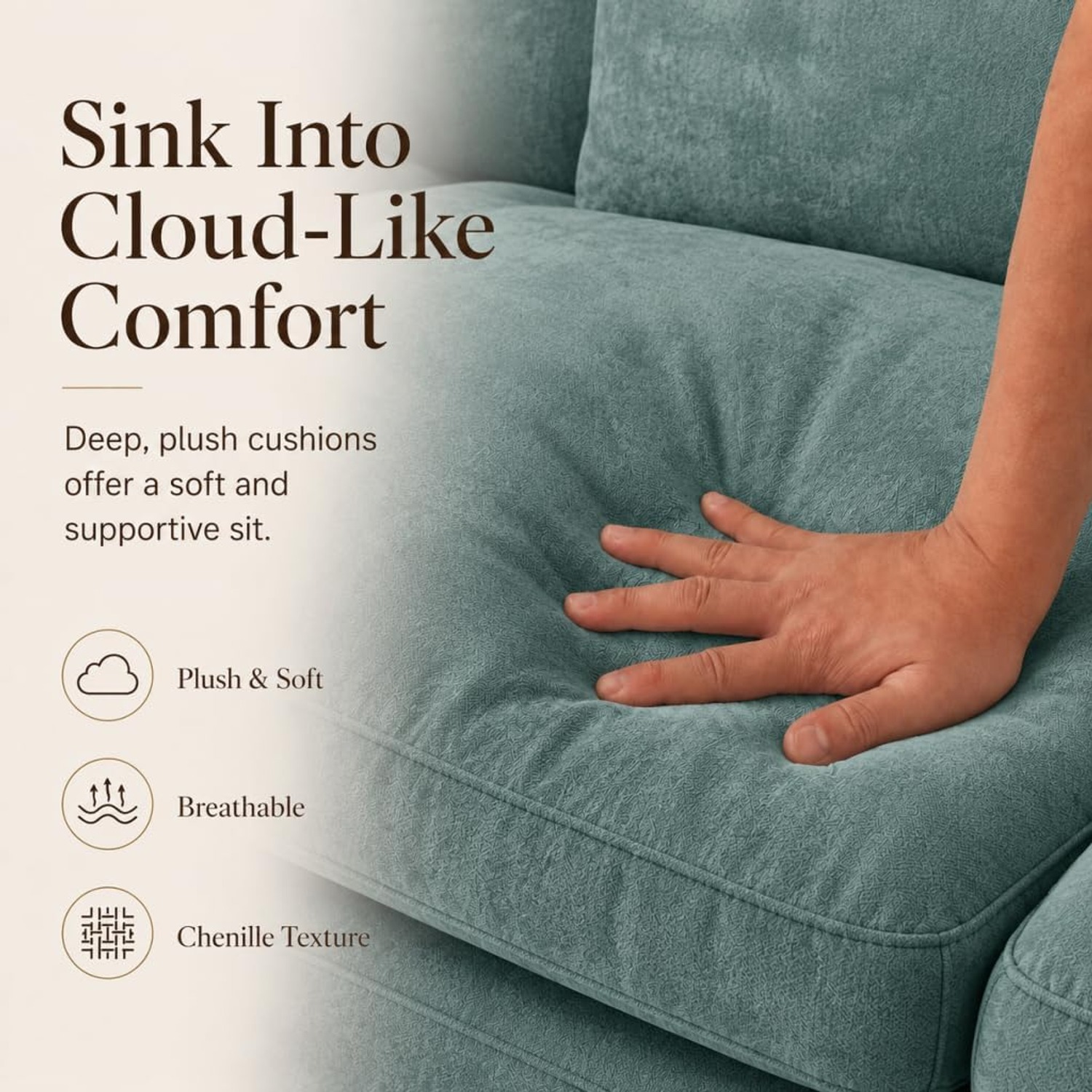
The seat cushions are boxed edge in a multiple cushion configuration, and the firmness is described as medium firm. Boxed edge means the cushion has a defined side panel rather than a rounded pillow shape. The practical benefit is that the cushion keeps a clean, square look for longer and does not sag at the front edge as quickly.
Medium firm is the right call for a main lounge. Soft cushions feel wonderful in the showroom and then flatten into a hollow where everyone sits. Medium firm holds you a little higher, which also makes getting up easier.
The back cushion support is listed as soft, which is a sensible pairing. Firm underneath, softer behind. You get support where your weight sits and give where your shoulders land.
Two throw pillows come included. Use them. A pillow at the small of your back changes how a sofa feels more than almost any other adjustment, and anyone hunting for the best deep seat sofa usually ends up buying pillows anyway.
The chenille question
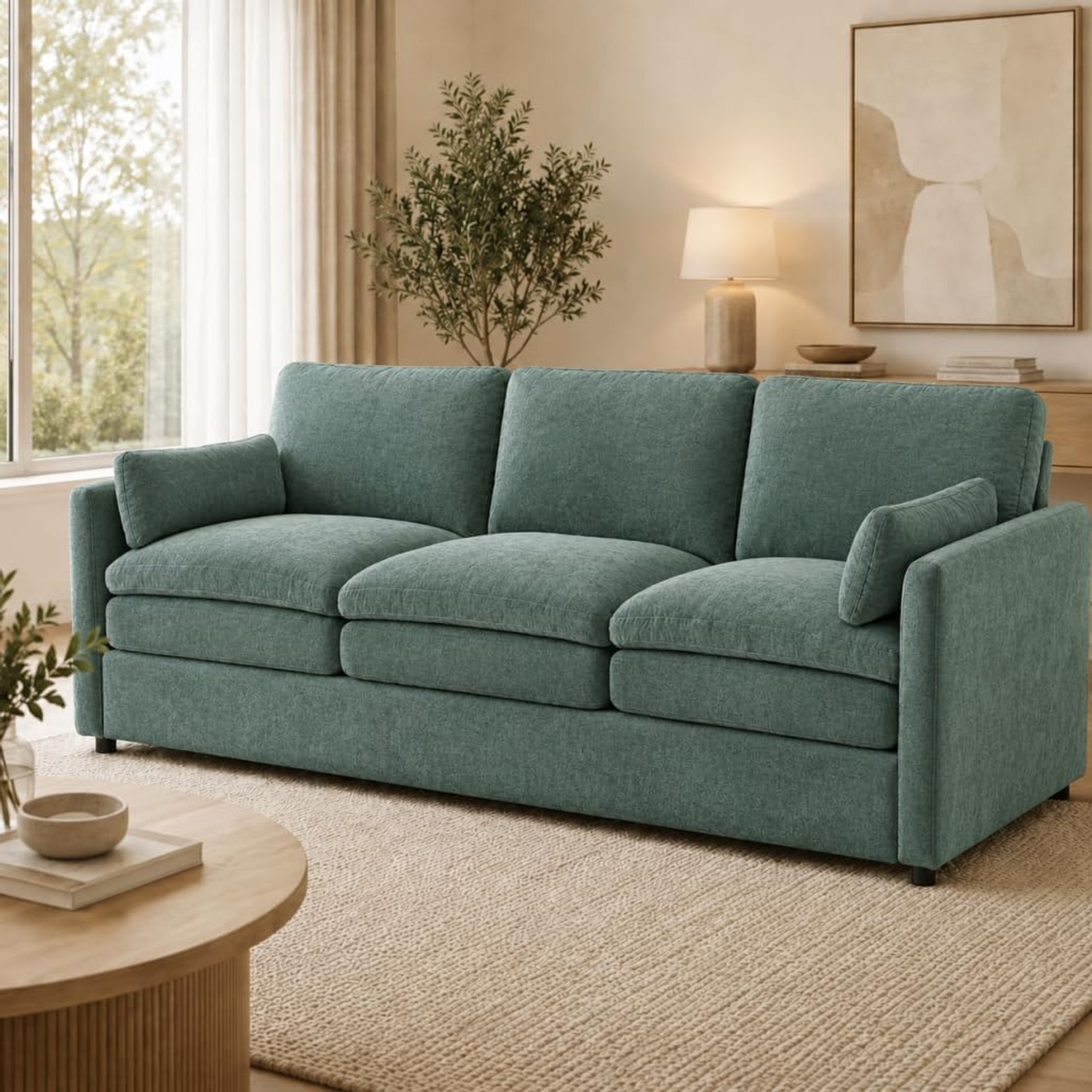
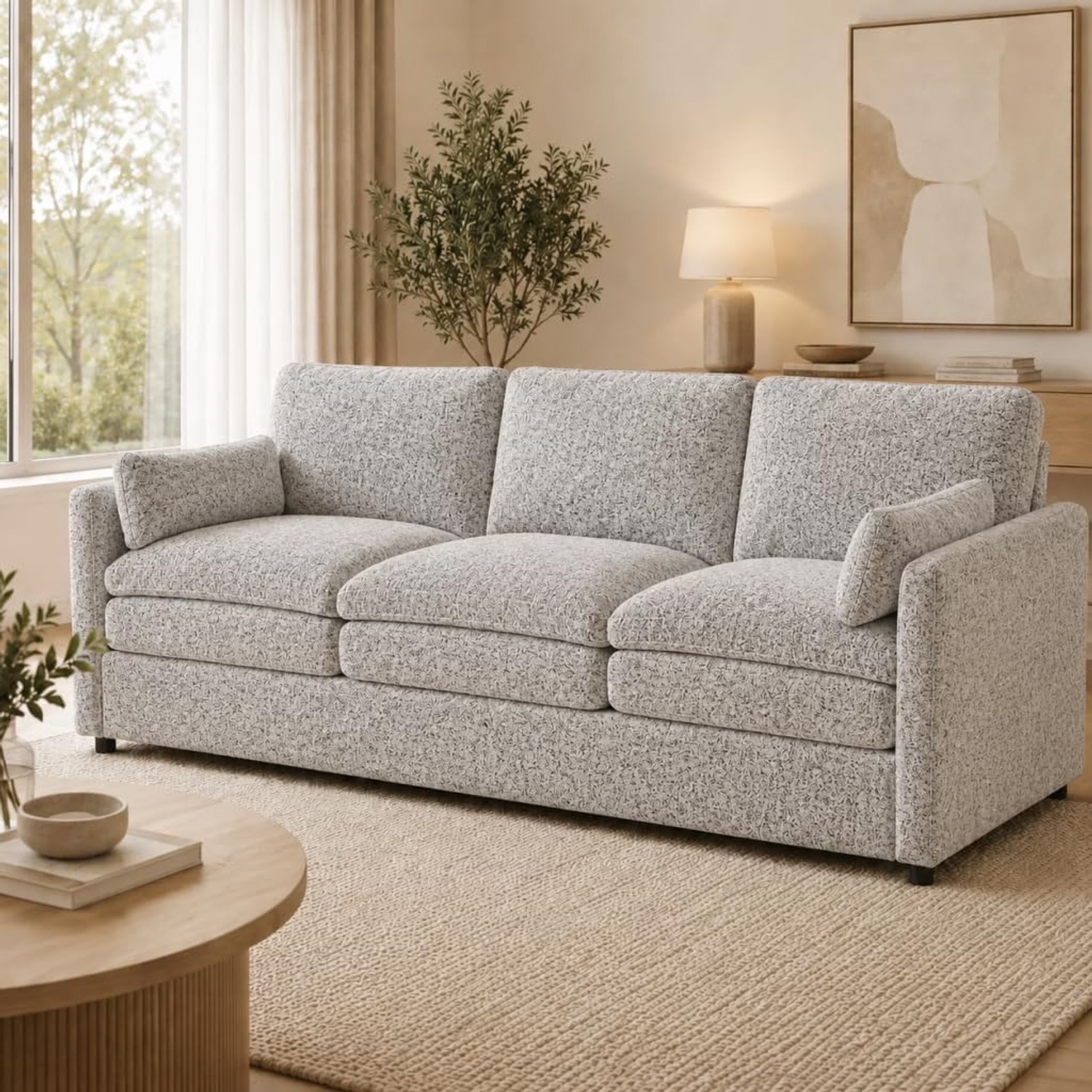
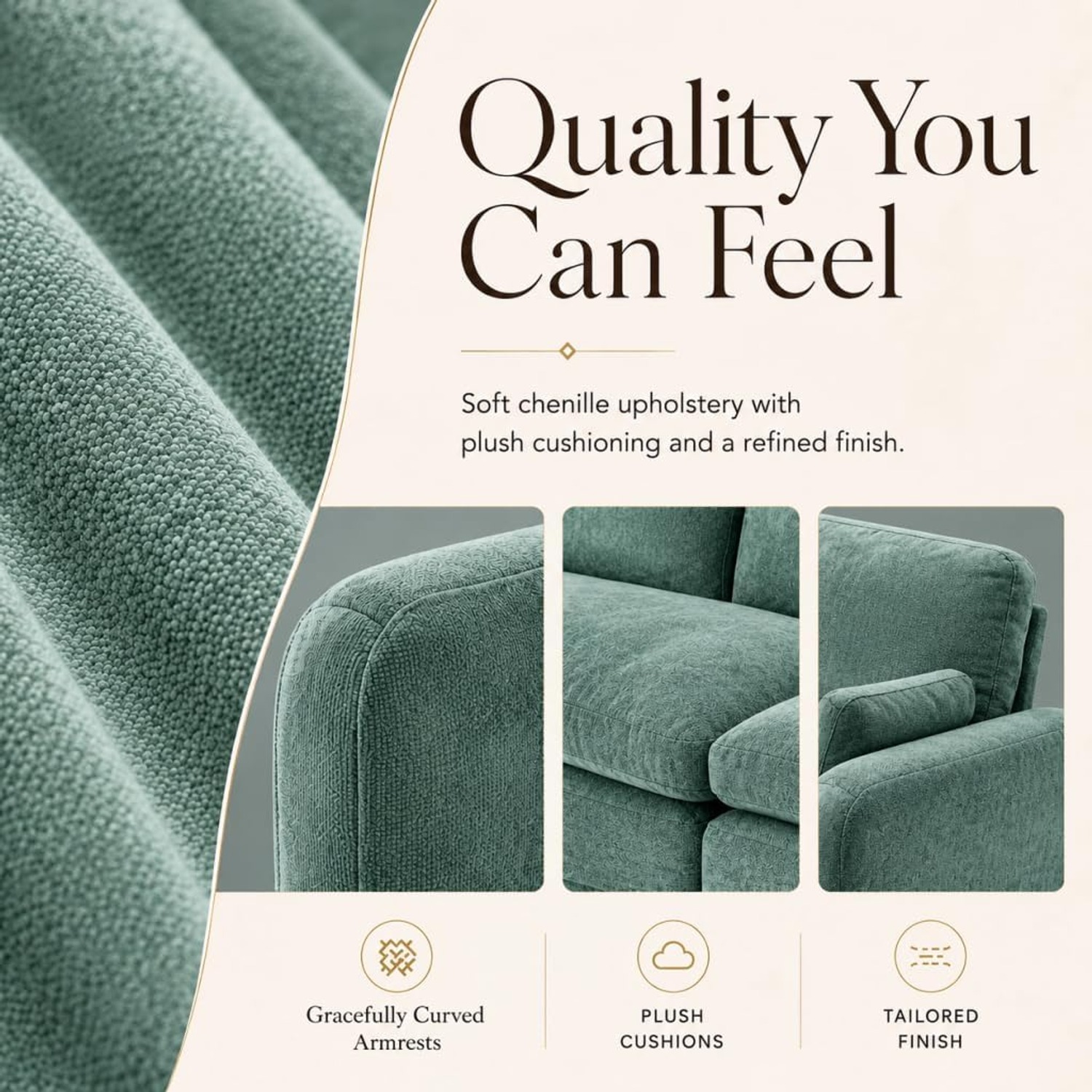
Chenille is a woven fabric with a short, dense pile. The threads are cut so they stand up slightly, which is why chenille catches light and looks richer than a flat weave. On a green lounge like this one, that texture stops the colour from looking like a block of paint.
It feels soft to the touch and it is quiet, with none of the squeaking you get from some coated fabrics. That makes it a good pick for a family room where people flop down rather than sit politely.
Chenille does hold dust and pet hair in the pile, so a regular pass with a vacuum upholstery brush is part of owning one. That is a small chore, not a problem. People shopping for the best chenille sofa should go in knowing that it rewards light, frequent cleaning rather than occasional deep cleaning.
The frame materials are listed as wood and metal, with sponge for the padding. That is a conventional and sensible build for a lounge in this class.
Assembly without the afternoon
The spec sheet lists assembly as required but notes that component connector assembly is not required. In plain terms, the pieces slot together without screws or tools.
This matters more than it sounds. The classic lounge delivery involves two or three boxes arriving on different days, a bag of bolts, and an hour on your knees. This one arrives in a single pack, which removes the waiting game entirely.
A practical tip before you unpack. Clear the floor space where the lounge will live, not just where the box lands. Assembling a three seater in a hallway and then trying to carry a finished 52kg lounge around a corner is a job nobody enjoys twice.
Speaking of that weight, 52kg is the shipping figure. Get a second person for the lift from the door to the room. After that, you are on your own in a good way.
Who this suits, and who it does not
It suits apartments and medium living rooms where a corner unit would be too much. It suits households that want a lounge ready on the day it arrives. It suits anyone who likes a softer fabric look over leather or a tight weave.
It is less ideal if you want an extra deep lounge for proper lying down on a regular basis, or if you need outdoor seating. The indoor outdoor usage field is clear, this is an indoor piece only.
It is also worth knowing the sofa type is listed as a sofa bed with a space saving feature, but the product record does not include any bed conversion measurements. If a guest bed is the main reason you are buying, ask us first rather than assuming.
Weight capacity is listed at 200kg across the lounge.
Making it work in the room
Green upholstery is easier to decorate around than people expect. It sits comfortably with timber floors, cream and oatmeal rugs, charcoal cushions and black metal legs on side tables. If your room is already busy with pattern, let the lounge be the only strong colour and keep everything else quiet.
Leave at least 45cm between the front of the lounge and a coffee table so people can walk past without shuffling sideways. If the room allows, pull the lounge 5cm to 10cm off the wall. It looks deliberate rather than pushed back, and it stops the fabric rubbing against the paint.
Keeping it looking good
The routine is short. Vacuum the fabric every week or two with an upholstery brush. Plump and rotate the cushions so the spot everyone favours does not wear ahead of the rest. Blot spills straight away with a dry cloth, never rub, because rubbing drives liquid deeper into the pile.
For stains, test any cleaner on a hidden section first, then work from the outside of the mark inwards. Keep the lounge out of harsh direct sun where you can, since prolonged sunlight will eventually lighten any fabric.
Lift the lounge when you move it. Dragging it stresses the joints and can mark your floor.
The short version
This is a 183cm wide, 73cm deep three seater in green chenille, with medium firm boxed-edge seat cushions, a soft cushion back, two throw pillows and a 200kg weight capacity. It arrives in one box at 52kg and joins together without screws or tools.
Measure your wall, tape out the footprint on the floor, and check your doorway. If the numbers work, the rest of it is straightforward. Anything you are unsure about, ask us before you order rather than after.